
Inclusive Support Isn’t a Buzzword,
Here’s What It Should Actually Look Like
What This Blog Will Cover
Why “inclusive” doesn’t always mean safe
The hidden gaps in NDIS support for LGBTQIA+ people
The difference between support that looks good vs support that actually works
How the right support team can change everything
What real, affirming support should feel like
Inclusive Support Isn’t a Buzzword,
Here’s What It Should Actually Look Like
Why “inclusive” doesn’t always mean safe
The hidden gaps in NDIS support for LGBTQIA+ people
The difference between support that looks good vs support that actually works
How the right support team can change everything
What real, affirming support should feel like
Let’s Be Honest About “Inclusive” Support
Let’s be honest.
A lot of services say they’re inclusive.
They’ll add a rainbow to their website.
Mention diversity in their values.
Maybe even run a training once a year.
But when it comes to actual support?
Many LGBTQIA+ people still feel:●
● misunderstood
● overlooked
● or like they have to explain themselves just to be supported
That’s not inclusion.
That’s surface-level.

Why “Inclusive” Doesn’t Always Mean Safe
There’s a big difference between being welcomed and being safe.
You can be welcomed into a space
and still feel like you have to filter yourself.
You can be accepted
but still feel like your identity is being “handled” instead of understood.
Real inclusion removes that pressure.
It creates an environment where you don’t have to second-guess how you show up.

The Hidden Gaps in NDIS Support for LGBTQIA+ People
The NDIS system can already feel overwhelming.
But for LGBTQIA+ individuals, there are added layers:
● Repeating your identity to multiple providers
● Navigating misunderstandings or assumptions
● Struggling to find services that genuinely “get it”
● Feeling like you don’t quite fit into the system
These gaps aren’t always obvious.
But they impact everything, from trust to outcomes.

Support That Looks Good vs Support That Actually Works
Some services look inclusive.
But real support goes deeper.
Support that looks good:
● Uses the right language but lacks understanding
● Offers generic plans that don’t reflect your reality
● Feels transactional rather than personal
Support that actually works:
● Understands your lived experience without needing constant explanation
● Adapts to your needs, not the other way around
● Builds trust, consistency, and real connection
That difference changes everything.
How the Right Support Team Changes Everything
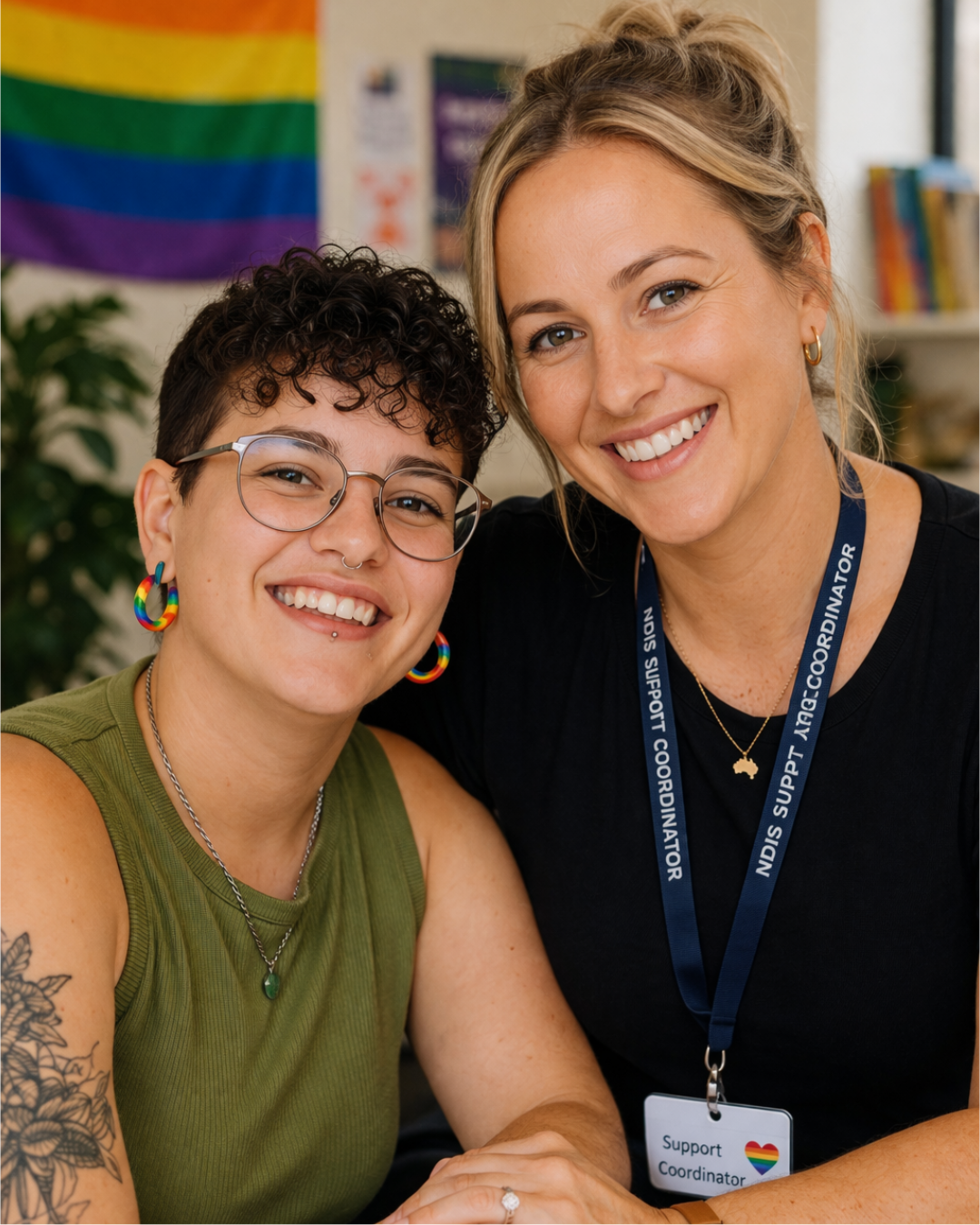
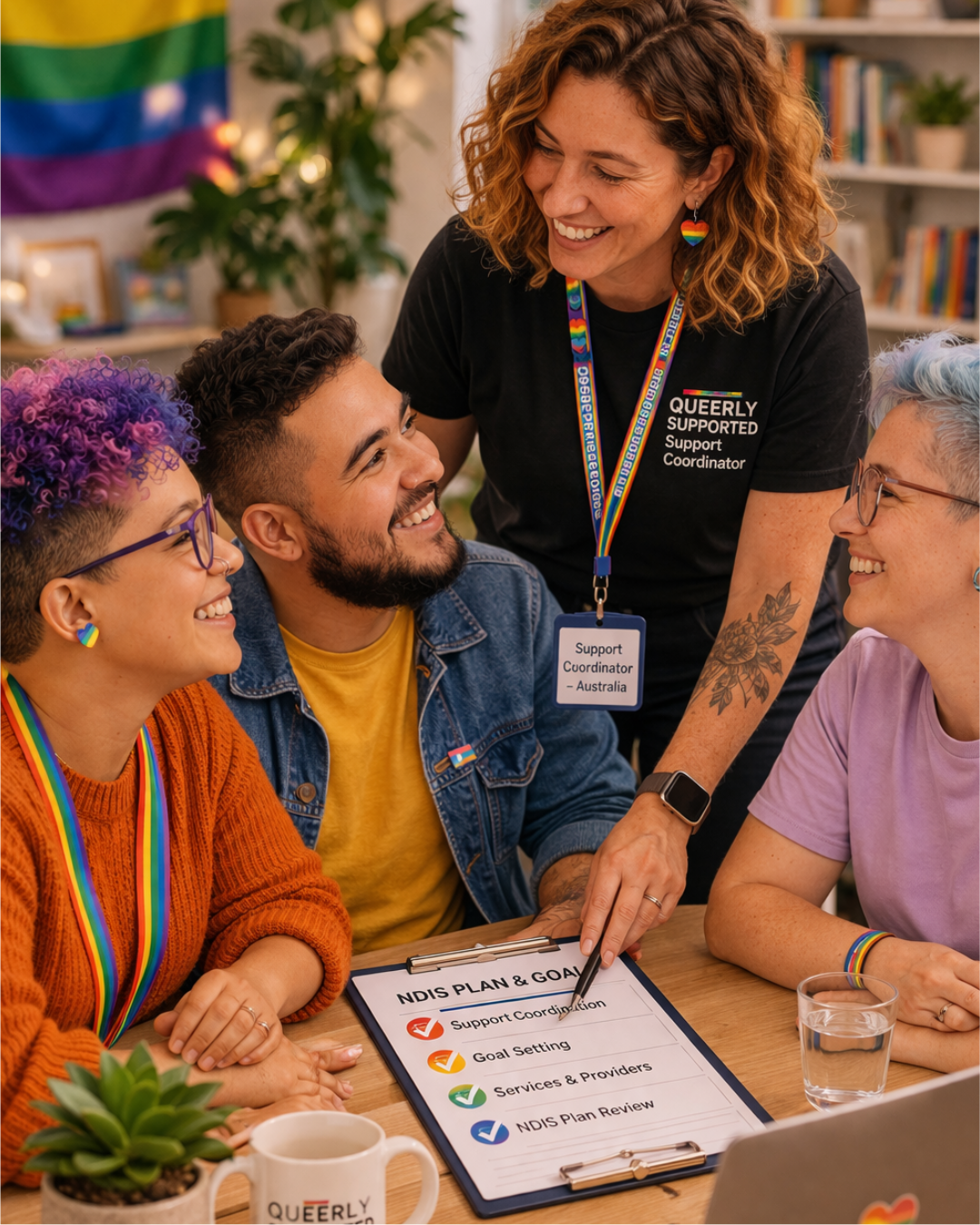
When you have the right support team:
● You feel confident making decisions
● You understand your NDIS plan clearly
● You don’t feel like you’re “too much” or “too complex”
● You can focus on your goals instead of navigating barriers
Support becomes something that works with you
not something you have to work around.

What Real, Affirming Support Should Feel Like
It should feel like:
✔ You don’t have to explain who you are every time
✔ You feel respected in every interaction
✔ You’re supported as a whole person, not just a participant✔ Your goals actually matter
✔ You feel safe enough to be yourself
Not a version of yourself that fits the system.
Your actual self.
You’re Not the Problem
If support has ever felt exhausting, confusing, or misaligned…
That’s not on you.
The system wasn’t built with everyone in mind.
But that doesn’t mean you should have to adjust yourself to fit it.
Let’s Be Honest About “Inclusive” Support
Let’s be honest.
A lot of services say they’re inclusive.
They’ll add a rainbow to their website.
Mention diversity in their values.
Maybe even run a training once a year.
But when it comes to actual support?
Many LGBTQIA+ people still feel:●
● misunderstood
● overlooked
● or like they have to explain themselves just to be supported
That’s not inclusion.
That’s surface-level.
Why “Inclusive” Doesn’t Always Mean Safe
There’s a big difference between being welcomed and being safe.
You can be welcomed into a space
and still feel like you have to filter yourself.
You can be accepted
but still feel like your identity is being “handled” instead of understood.
Real inclusion removes that pressure.
It creates an environment where you don’t have to second-guess how you show up.
The Hidden Gaps in NDIS Support for LGBTQIA+ People
The NDIS system can already feel overwhelming.
But for LGBTQIA+ individuals, there are added layers:
● Repeating your identity to multiple providers
● Navigating misunderstandings or assumptions
● Struggling to find services that genuinely “get it”
● Feeling like you don’t quite fit into the system
These gaps aren’t always obvious.
But they impact everything, from trust to outcomes.
Support That Looks Good vs Support That Actually Works
Some services look inclusive.
But real support goes deeper.
Support that looks good:
● Uses the right language but lacks understanding
● Offers generic plans that don’t reflect your reality
● Feels transactional rather than personal
Support that actually works:
● Understands your lived experience without needing constant explanation
● Adapts to your needs, not the other way around
● Builds trust, consistency, and real connection
That difference changes everything.
How the Right Support Team Changes Everything
When you have the right support team:
● You feel confident making decisions
● You understand your NDIS plan clearly
● You don’t feel like you’re “too much” or “too complex”
● You can focus on your goals instead of navigating barriers
Support becomes something that works with you
not something you have to work around.
What Real, Affirming Support Should Feel Like
It should feel like:
✔ You don’t have to explain who you are every time
✔ You feel respected in every interaction
✔ You’re supported as a whole person, not just a participant✔ Your goals actually matter
✔ You feel safe enough to be yourself
Not a version of yourself that fits the system.
Your actual self.
You’re Not the Problem
If support has ever felt exhausting, confusing, or misaligned…
That’s not on you.
The system wasn’t built with everyone in mind.
But that doesn’t mean you should have to adjust yourself to fit it.
Work With Queerly Supported
At Queerly Supported, we do things differently.
We provide:
● Support Coordination
● Psychosocial Recovery Coaching
● Specialist Support Coordination
All designed to be affirming, flexible, and built around you.

COMPANY
CUSTOMER CARE
LEGAL
FOLLOW US


© 2026 Queerly Supported. All Rights Reserved.
Work With Queerly Supported
At Queerly Supported, we do things differently.
We provide:
● Support Coordination
● Psychosocial Recovery Coaching
● Specialist Support Coordination
All designed to be affirming, flexible, and built around you.